Showing posts with label Medical Staff. Show all posts

Tuesday, July 29, 2025

Father William Martin Carroll, CSsR

The U.S. Army Chaplain Corps was officially authorized on July 29, 1775, and 2025 marks the 250th anniversary of the Corps. In honor of this milestone, we celebrate the legacies of Rev. Hansen Bergen and Father William Carroll, CSsR, who served as chaplains with Base Hospital 50 in Mesves, France, from August 1918-January 1919.

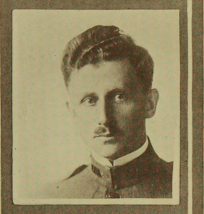
picture of a priest in uniform
Father William M. Carroll, CSsR
"Priests Asked to Volunteer"

In addition to the medical staff, nurses, and enlisted men of Base Hospital 50, many of whom were from the greater Pacific Northwest region, two chaplains were also assigned to the unit: one Protestant and one Catholic; Reverend Hansen Bergen, a Presbyterian minister, and Father William Carroll, a Redemptorist priest. 

When the United States officially entered the Great War, the country did not even have a standing Army. As a result, as the Army and other military branches began developing their fighting forces, they also realized that considerable support personnel were needed, including chaplains. Chaplains had been part of America’s military since the Revolution; however, before World War I, they were appointed to individual regiments and not organized as a specific corps.

In 1917, Congress appropriated more than $1,000,000 for the recruitment of clergy for the armed forces. Men younger than 40 and in good health were sought.  Successful candidates were to be paid $2,200/year for overseas duty. Fr. Carroll, at 45, was older than the recruiting parameters, but may have been selected because he met other criteria.

The Right Reverend Patrick J. Hayes, D.D. (later Archbishop of New York), was tasked with recruiting hundreds of priests as commissioned officers or chaplains to serve during World War I. Although commissioned as first lieutenants, chaplains wore Latin crosses in place of rank insignia to appear less militaristic in the hopes of establishing a better rapport with the enlisted men. The Army estimated upwards of 40% of its soldiers were Catholic and set out to recruit over 500 priests. Local dioceses were advised to release priests for Army service. One such priest to answer Bishop Hayes' (and the nation's) call was Father William Carroll, then a parish priest at Most Holy Redeemer Parish in Detroit.

Irish-born Fr. Carroll was a Redemptorist priest who had immigrated to the United States in 1896. The oldest child of John Carroll, a clerk, and his wife, Ellen Ahern, who were married in County Limerick, Ireland, on February 3, 1871, William Martin Carroll was born on November 8, 1872, on Pennywell Street, in the city of Limerick. The following day, William was baptized at St. John's Cathedral just a few short blocks away. William was followed by siblings Mary Catherine (known as Mary Kate; 1874), Ellen (1878), and Edward Joseph (1880). John Carroll's occupation was recorded as a draper in subsequent birth records. 

The origins of Fr. Carroll's vocation are unknown, but he benefited from an extensive education before entering the priesthood, despite his family's modest background. Personnel records note that he was educated at the Christian Brothers' School and High School, as well as Mungret College in Limerick, and later attended Maynooth Seminary, which was then part of the Royal University in Dublin.

In 1896, at the age of 23, William Carroll left Ireland bound for the New World, arriving in New York City on the RMS Lucania on August 22, 1896. The ship's passenger manifest does not note his intended destination following his arrival, but Redemptorist records indicate he began receiving theological training at the Redemptorist Seminary in Kirkwood, Missouri, soon after his arrival.

Officially named the Congregation of the Most Holy Redeemer (Congregatio Sanctissimi Redemptoris, abbreviated CSsR), the Redemptorist order was founded in 1732 by St. Alphonsus Liguori to work among the poor and abandoned in the mountains of Southern Italy. Members of the Redemptorist order began ministering in Ireland in 1851, beginning at St. John’s Cathedral in Limerick. Primarily a missionary order, the Redemptorists focus on preaching the Gospel, especially to the poor, and are known for their special devotion to Our Mother of Perpetual Help. The original icon was entrusted to the order's care by Pope Pius X in 1865.

Perhaps Fr. Carroll's early exposure to Redemptorist fathers inspired his interest in the priesthood. He began his studies as a novitiate under Father Augustine Ahlert until he was transferred to the seminaries at Rock Church (St. Alphonsus Liguori Catholic Church, St. Louis) and De Soto, Missouri. Having received some seminary training in Ireland, William was not required to complete the full course of studies, and he made his profession on October 15, 1897. The Redemptorists have been present in North America since 1832 and were well-established by the time William Carroll was ordained on July 25, 1900, by fellow Irishman Archbishop (and later Cardinal) John J. Glennon in Kansas City, Missouri. Fr. Carroll said his first Mass there at the seminary in Kansas City. 


Fr. Carroll, Kansas City, 1897
Following his ordination, Fr. Carroll began a productive and well-traveled career. Over the next eighteen years, Fr. Carroll was posted to parishes in Denver, Colorado; Fresno, California; Kirkwood, Missouri; St. Louis, Missouri; and New Orleans, Louisiana. He coordinated building projects, delivered commencement addresses, advised young women to "look before you leap" when considering marriage, officiated at Knights of Columbus breakfasts, and performed a variety of other pastoral duties, including saying Mass, hearing confessions, visiting the sick, and more. 

When the recruitment of priests to serve as chaplains began, Fr. Carroll was released from his duties as a parish priest in Detroit. Upon enlisting, Fr. Carroll initially served as a chaplain for three months with the Knights of Columbus at Kelly Field, one of thirty-two Air Service training camps established during World War I. Following his commission as First Lieutenant on August 1, 1918, at Detroit, Michigan, he was assigned to serve as a chaplain with Base Hospital 50. He departed for Europe with a group of Casuals aboard the France on August 25, 1918. (Casuals were soldiers temporarily unattached to a specific unit.) Fr. Carroll's emergency contact was listed as Rev. Christopher McEnniry, superior of the Redemptorists' St. Louis province in 1918. Coincidentally, Base Hospital 50's nursing staff traveled to Europe on the same troop transport as Fr. Carroll.

Fr. Carroll, Mesves, France, ca. 1918
Fr. Carroll, BH50 Reunion, Seattle, 1937 
  

From the time he arrived at the Mesves Hospital Center, Fr. Carroll and his fellow chaplain, Rev. Bergen, were responsible for leading worship services, administering sacraments, and performing religious rituals, including bedside prayers and end-of-life ceremonies, balancing the diverse religious needs of the patients and hospital personnel. Chaplains provided spiritual and emotional support to patients and staff, offering counseling and a calming presence during a time of tremendous stress. 

The two chaplains officiated at the funerals of soldiers, prisoners of war, and staff who died at the hospital center, carefully recording their names, service numbers, and burial locations so they could be accounted for to the Army's Quartermaster Corps. Certainly, presiding over the funerals of the five members of Base Hospital 50 who died while serving in France must have been among the more challenging duties the chaplains faced. Following the war, the bodies of those buried at the hospital center's temporary cemeteries were exhumed and reburied in one of the eight newly created cemeteries for America's war dead, or, if their families preferred, their remains were repatriated to the United States. 

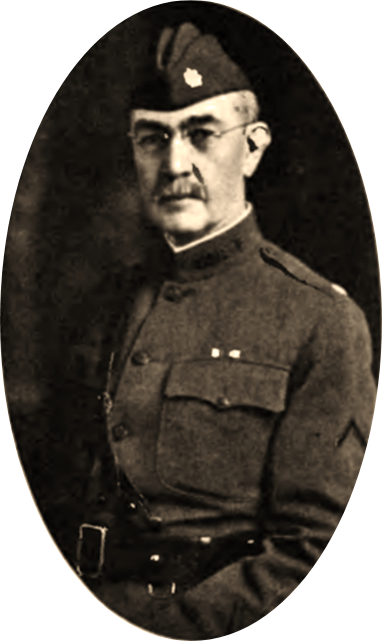
Following the Armistice on November 11, 1918, Fr. Carroll served with Base Hospital 50 until it was formally disbanded in January of 1919. He continued to serve in France with the Army's Services of Supply (SOS) division until he was discharged at Camp Dix, New Jersey, on August 1, 1919. In his portrait above, taken after the war had ended, Fr. Carroll has an Advanced Sector patch (part of the SOS) on his uniform and two six-month service stripes on his sleeve.

Following his return from active duty, Fr. Carroll resumed his busy ministry, with postings in Denver and New Orleans. In 1925, while serving in Kansas City, Fr. Carroll celebrated the 25th anniversary of his ordination. The celebration was attended by fellow clergy who had been present at his first Mass. In addition to his clerical responsibilities, Fr. Carroll became a member of the American Legion, a veterans' organization authorized by Congress in 1919. 

After the war, like Fr. Carroll, the staff of Base Hospital also returned to their pre-war daily lives. They held a reunion every year, however, on Armistice Day, November 11, to reminisce and reconnect. Fr. Carroll, far away, was not able to attend these gatherings until 1937, when the invitation to the annual reunion noted the opportunity to "meet again our beloved Chaplain, Father Carroll, who is coming from New Orleans just to see the old gang." By this time, Fr. Carroll had been quietly retired due to declining health. He may have been gassed or suffered a bout of pneumonia during the influenza pandemic, but Fr. Carroll developed lung problems and began declining sometime after his Army service. 

The trip from New Orleans to Seattle was so arduous for Fr. Carroll that immediately upon his arrival in Seattle, he was whisked to a local hospital. "With a twinkle in his eye," Fr. Carroll joked "it was an excuse to put him in a good central place where they could pop in and talk to him." Whether it was a ploy or not, their "principal guest" received a steady stream of visitors from his former compatriots. As he reminisced about his wartime service, Fr. Carroll stated:
All of the men and women at Base Hospital 50 did a marvelous job. The hospital was a series of wooden shacks with tar-paper roofs. It rained all the time. It was cold. The roofs leaked. The doctors and nurses had an eternal fight to keeps things antiseptic and to handle the thousands of cases which came to them. But they did things. I have never had a chance to attend one of the reunions before and I am very happy to be here.

Sadly, Fr. Carroll wouldn't get another opportunity to attend one of Base Hospital 50's reunions. Just over a year later, on December 2, 1938, Fr. Carroll died of chronic myocarditis and nephritis at Mercy Hospital in New Orleans at the age of 66. He was buried at the Redemptorist Cemetery in nearby Lacombe, Louisiana. In addition to his life of service, Fr. Carroll was remembered for the kindness he extended to the many soldiers he consoled, whether American, French, or German. 

Requiem aeternam dona eis, Domine, et lux perpetua luceat eis.
Eternal rest grant unto him, O Lord, and let perpetual light shine upon him.  
Sunday, July 27, 2025

Rev. Hansen Bergen, Chaplain (Protestant), U.S.A., Seattle, WA.

The U.S. Army Chaplain Corps was officially authorized on July 29, 1775, and 2025 marks the 250th anniversary of the Corps. In honor of this anniversary, we celebrate the legacies of Rev. Hansen Bergen and Father William Carroll, CSsR, who served as chaplains with Base Hospital 50 in Mesves, France, from August 1918-January 1919.

Headshot of Hansen Bergen, Chaplain.
Reverend Hansen Bergen
Reverend Hansen Bergen lived a life dedicated to his country, his fellow Army men, and to the Presbyterian faith. Despite his age, he served in both World Wars and was only pulled out of active service after he sustained a service-related disability.1 To truly appreciate the dedication he had to his work as a chaplain, it is imperative that we address the elephant in the room: his heritage.

Reverend Hansen Bergen sports a name that holds power in New York. Born on August 21, 1888, in New York, Bergen was the second-oldest son to Reverend Dr. John Tallmadge Bergen and Ellen Grace Dean. Most importantly, he was lovingly named after his ancestral grandfather, Hans Hansen Bergen. That name may sound familiar to those in New York, as Hansen’s heritage can be directly traced back to the very foundations of modern New York.

As the tenth generation of the Bergen family, he was born and briefly raised in the original Bergen farmhouse built on Bergen Island (now Bergen Beach) by founding immigrant Hans Hansen Bergen.2 Hans Hansen Bergen was among the earliest settlers of the Dutch Colony of New Amsterdam and was notably one of the first few Scandinavian settlers.2 Despite their deeply established roots in New York, Dr. John T. Bergen, Hansen’s father, felt a calling to serve the Presbyterian Church in the Midwest. As a result, the Bergen family moved out of New York and never truly returned since. 

Postcard of Bergen Beach via National Amusement Park Historical Association
Bergen Beach postcard via National Amusement Park Historical Association

From census and college records, Bergen grew up in Michigan and Minnesota.3,4 He graduated from Huron College in 1912 and received a master's degree from Princeton Theological Seminary in 1915. His life was particularly eventful following his graduation; not only was he ordained as a pastor for the Seattle-Brighton Presbyterian church,5 but he was also married to his wife, Jessie McCrindle, in 1915.6 Additionally, their marriage license indicates that Bergen’s wedding was officiated by his own father.7

In 1917, Bergen was drafted for the Great War.8 At the time, Bergen and his wife had just welcomed their newborn son into the world. With the inevitable fact that he was to be sent to war, Bergen resigned as pastor for the Brighton Presbyterian Church.9 Bergen was given the rank of 1st Lieutenant and headed to Camp Lewis, WA, where he served as camp pastor before being assigned as the protestant chaplain for Base Hospital 50 in 1918.10 Shortly after the announcement of his position with the Base Hospital, Jessie gave birth to their second child, a baby girl.11

Although a chaplain was optional for Base Hospital 50, Bergen was appointed for service with the Hospital Unit.12 As part of his chaplain duties, he was also responsible for boosting soldiers’ morale. Thus, he was appointed Athletic Officer and was put in charge of the YMCA building associated with the Base Hospital.12

Cover of Chaplain Bergen's notebooks, UW, Special Collections
Chaplain Bergen's notebooks,
UW, Special Collections
 
   Page within Chaplain Bergen's notebooks, UW, Special Collections   Second page within Chaplain Bergen's notebooks, UW, Special Collections

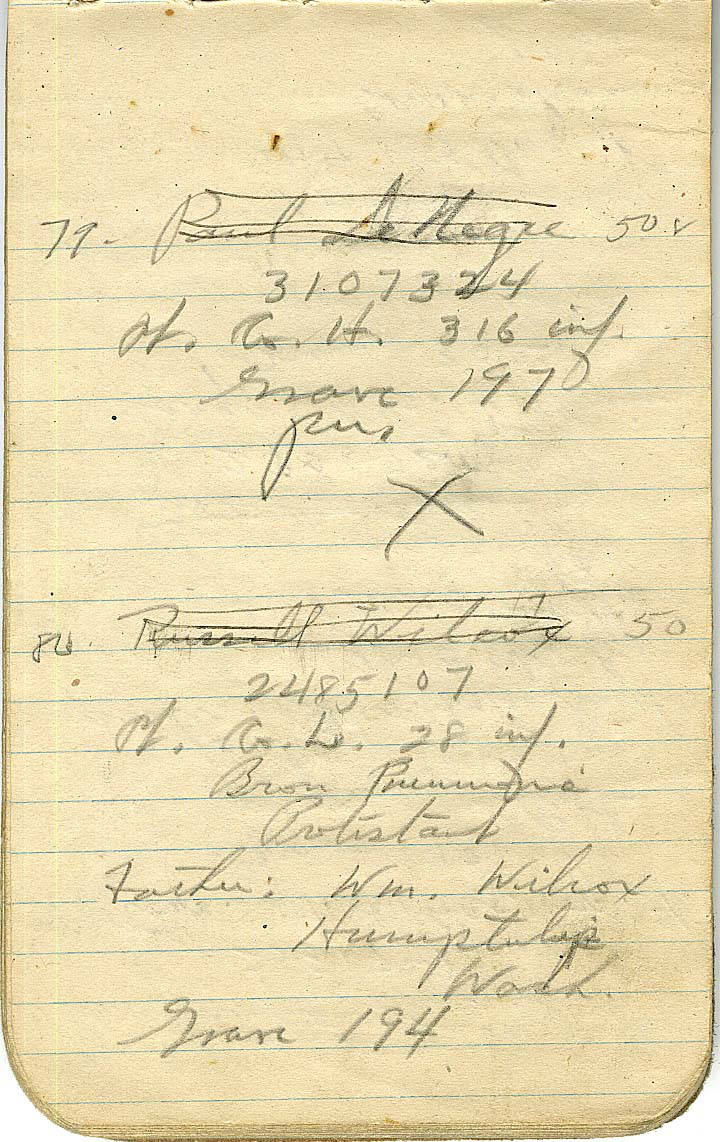
One of his most important chaplain responsibilities was his duty to serve dying soldiers and their next of kin. During his service with Base Hospital 50, he created burial log records for soldiers who were expected to die, allowing him to conduct funeral procedures for both American and French soldiers after their passing. In his burial logs dating from September 1918 to February 1919, Bergen meticulously recorded each individual he tended to and noted their full name, religion, next of kin, cause of death, burial location, and service number. After contacting each soldier’s next of kin, Bergen would cross their name off his log. By the end of his service, he had attended to 315 soldiers: 286 American and 12 French, along with 17 additional burial sermons. Bergen’s two burial logs can be viewed in the University of Washington Libraries, Special Collections. 

After Base Hospital 50, he worked briefly with Base Hospital 72 until he was discharged.13 From his military records, Bergen served overseas from September 5, 1918, to July 7, 1919, and received an honorable discharge on July 9, 1919.13 

Once Bergen returned to the United States, he returned to his family and his position as a pastor for the Presbyterian faith and subsequently accepted a position in the newly built Madrona Presbyterian church in WA.14 Additionally, he accepted captaincy in the Army Reserves during this period of peace.1 Shortly after Bergen’s return, the couple welcomed their third child, a second girl, into their family.15 

Sometime around 1932, Bergen moved to Wisconsin to serve at the Eau Claire Presbyterian Church until 1941, the start of WWII.16  From the occasional news article between 1920-1940, Bergen can be found taking a relatively active role in his community with the Kiwanis club and the American Legion. 

On September 1st, 1939, Nazi-Germany invaded the neighboring country of Poland. Despite the then-prominent isolationist mindset from the general American public, Bergen, at the age of fifty-four years old, returned to active service in early 1941. By July 3rd of that same year, Bergen was assigned to Camp Croft’s Station Hospital to serve as camp chaplain.17 On December 7, 1941, Pearl Harbor was attacked by the Imperial Japanese Navy Air Service. The US responded to this tragedy by declaring war on Japan and their allies. 

Artist's impression of SS Argentina, curtesy of Wikipedia Commons
Artist's impression of SS Argentina, 1938–41 or 1948–58, VIA Wikipedia Commons
During the war, Bergen was Post-Chaplain at Camp Kilmer, N.J., where he oversaw the processing of chaplains for overseas duty.1 He was later transferred to work on the S.S. Argentina as Transport-Chaplain.1 Shortly after WWII ended, in 1946, Bergen suffered a heart attack in Grenick, Scotland.1 This most likely led to his retirement with service-related disability with the rank of Lieutenant Colonel in 1947.1

Bergen lived a relatively quiet life after he retired from service. Sometime during their retirement, Bergen and his wife moved to La Jolla, California.18 In 1967, Bergen was awarded a Doctor of Humanities degree in recognition of his and his wife's generous donation of $50,000 to his alma mater, Huron College, for the construction of a new chapel and fine arts building.19 Unfortunately, his family could not celebrate this award for long, as just four months later, on September 22, Bergen suddenly passed away. He was survived by his wife, three married children, ten grandchildren, and three great-grandchildren.19 

Friday, January 20, 2023

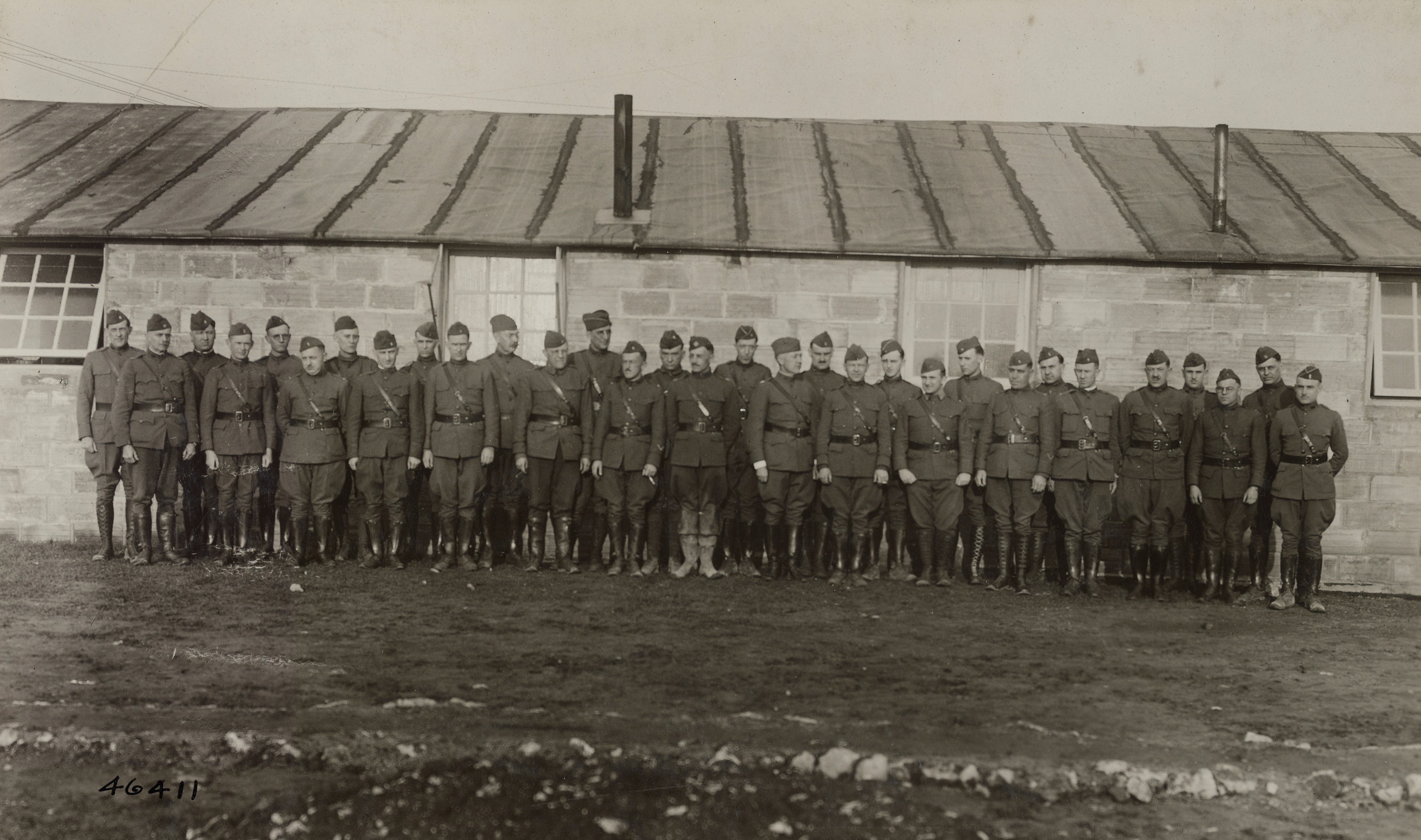
Officers of Base Hospital 50


Officers of Base Hospital No. 50

Mesves, Nievre, France, 19 January 1919.

The United States National Archives and Records Administration (NARA) has been digitizing photos in its collections taken by the U.S. Army Signal Corps during World War I and adding records to its Archival Research Catalog (ARC). 

This photograph of the officers of Base Hospital 50 was taken the day after Major James Eagleson received orders the unit was to disband. A memorial service was held to honor the five members who died while the unit served in France: Charles Fletcher, Dr. William Kanter, Edward Nesser, Samuel Parker, and William White. Chaplains Hansen Bergen and Fr. William Carroll C. SS. R., addressed the unit in the Recreation Hall, along with Major Eagleson. The following day, January 20, 1919, Base Hospital 50 ceased operations and all of its remaining patients were turned over to Base Hospital 54. 

Front row. Left to right:
Major J. A. Hawkins; Lt. K. Vaughn; Lt. J. R. Carothers; Lt. H. F. Garmain; Lt. H. C. Randolph; Capt. E. O. Jones; Lt. H. B. Thompson; Capt. Copeland Plummer; Capt. A. J. Helton; Major H. E. Allen; Lt. L. Savitsky; Lt. J. Denno; Lt. H. J. Knott; Major F. A. Black; Lt. A. K. Stebbing; Lt. A. F. Mattice. 

Rear row. 
Capt. F. T. Wilt; Capt. Robert Hamilton; Lt. E. L. Wilkins; Chaplain W. M. Carroll; Lt. G. A. Braun; Major J. B. Eagleson; Major E. P. Fick; Capt. T. F. Shinnick; Lt. W. W. Schmidt; Lt. G. L. Curran; Lt. H. T. Buckner; Capt. W. E. Lowrie; Lt. J. J. Szmanski; Lt. J. A. Lybecker; Major N. A. Cary.

Photo credit:  Officers of Base Hospital No. 50.. Photograph 86698995, local identifier 111-SC-46411.  (catalog.archives.gov/id/86698995 : accessed 20 January 2023.)


Sunday, October 1, 2017

Comrades in Arms: Claire Russell and George Curran

Detail from WWI-era postcard.
NLM D05910


Amidst the long hours and grueling work in France, romance blossomed between at least one couple who served with Base Hospital 50 and became 'comrades in arms.'

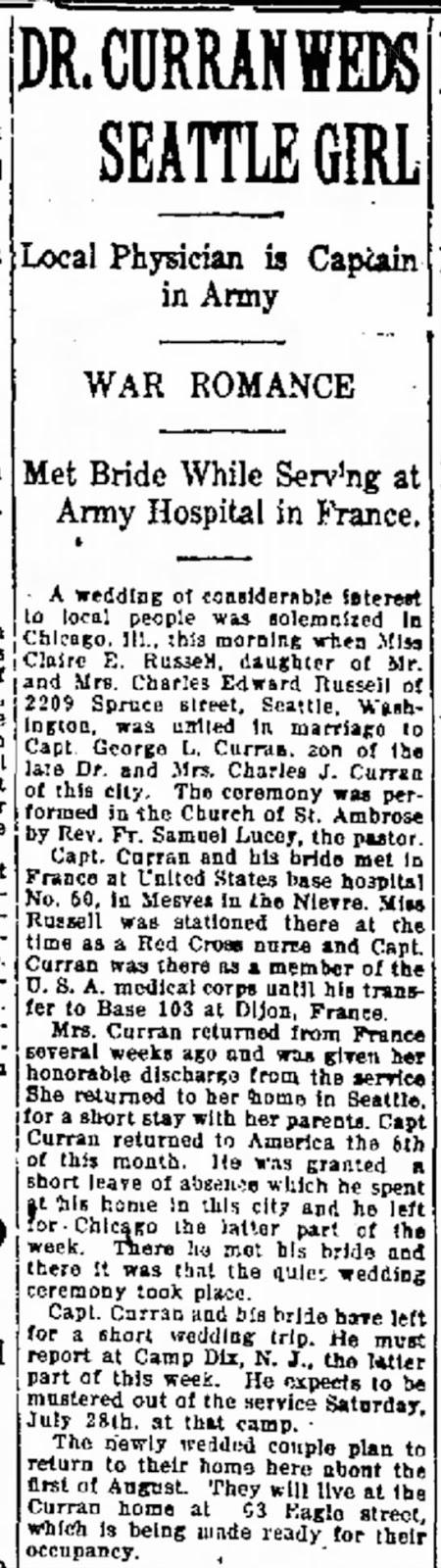
After their service to Uncle Sam ended Claire Russell, RN, and George Curran, MD, were married in Chicago, the culmination of a friendship begun in France. They served several months together with Base Hospital 50 and continued corresponding after both were reassigned to other hospital units.

Claire Elizabeth Russell was the second child born to Charles Edward Russell and his wife Ella Mundhenke. Charles was a native of Centerville, Ohio, and Ella of Palmer, Illinois. Their paths crossed out west and they were married on August 23, 1888, in The Dalles, Oregon. Their oldest child, Florence, was born in Seattle, Washington, before the young family settled in Port Angeles where Claire was born on February 15, 1892.1 Sisters Elsie, Nigel, and Avonelle followed before a brother, Henry, rounded out the family in 1908.

Claire Russell Curran, RN (1892-1980)
Used with permission, Jane Curran-Meuli. 


The Russell family relocated across Puget Sound to Everett about 1908. At the time of the 1910 census, the Russell family is living there at 2026 Colby Avenue. Claire's entry in the 1915 Everett City Directory indicates she is working as a nurse, having graduated from Everett General Hospital, a program administered by the Sisters of Providence.2, 3


Claire answered the call for graduate nurses to serve with Base Hospital 50. Like Claire, most of the unit's nurses were from the Pacific Northwest. After taking the oath as an Army Nurse in Everett on May 23, 1918, Claire reported for duty at Fort Riley, Kansas, just a few days later, on May 28th. Two months later, on July 23th, she was transferred to the Nurses Mobilization Station in New York, where she received four weeks of military training.13

Together with another Everett girl, Hazel Gourley, she left New York on August 24, 1918, with the nurses of Base Hospital 50 aboard the La France, arriving at the French port of Brest on September 3. Claire served six months with Base Hospital 50 before being transferred to Evac Hospital No. 31, at Nantes, for four months.

Claire departed from France on the Cap Finisterre on April 25, 1919, arriving in New York on May 5th, where she was discharged. After a visit of several months with her family in Seattle, Claire was reunited with George in Chicago where they were married at St. Ambrose Catholic Church in the Hyde Park neighborhood on July 20, 1919.4 The young couple returned to George's hometown of North Adams, Massachusetts, to begin their life together, after a brief honeymoon.

George Lally Curran, MD (1887-1938)
Used with permission, Jane Curran-Meuli.
Across the country from Claire's home on the west coast, her future husband, George Lally Curran, was growing up in the colonial mill town of North Adams, Massachusetts, where he was born on Christmas Eve, December 24, 1887.8 The third of seven children, George had four brothers; Charles, Arthur, William and Edward, and two sisters, Mary and Mabel.5, 6 His parents Charles James Curran and Catherine Agnes Lally – both children of Irish immigrants – were married on May 28,1883, in nearby Williamstown. Charles Curran attended Holy Cross College and then studied medicine at New York University's Bellevue Hospital, before setting up his practice in North Adams.

George attended St. Joseph's School in North Adams, before moving onto Northside Preparatory School in Williamstown. George Curran attended Amherst College for a year, where he was a member of Phi Gamma Delta. Following in his father's footsteps, George then entered medical school at New York University, graduating in 1910.7 He joined his father's busy general practice at 63 Eagle Street in North Adams just months before his father's untimely death at the age of 49.

Despite his bustling practice, George quietly applied for admission in the Army Medical Corps when the U.S. entered the war. He was commissioned as a First Lieutenant on February 13, 1918, and five weeks later, on March 29, to the surprise of his many patients and the community, he was called to active duty. Initially, he was assigned to Walter Reed Hospital in Washington, DC, treating influenza cases and returning wounded. In early August he was dispatched to Base Hospital 50. After several months he was then transferred to Base Hospital 103 near Dijon. In the spring of 1919, he was awarded the French Medal of Honor for his service. After being promoted to Captain, George received his orders to return home in late June. He arrived at Camp Dix, New Jersey, on July 6, 1919, aboard the Great Northern.

Main Street, North Adams, Massachusetts, 1906 Postcard.
Having secured leave before his return to the U.S., George quickly made his way to Chicago where he was finally reunited with Claire. After George was officially mustered out of the service on July 28, the couple took up residence on Eagle Street and George immediately resumed the practice he had vacated 17 months prior. George's brothers Arthur and William also followed their father into medicine and the three brothers worked together for several years. George and Claire soon welcomed two sons, George Lally, Jr., in 1920, and Charles Edward in 1923.9, 10 Both sons served their country during wartime – World War II, in their case – as their parents had before them.

Separated during the war, Claire and George were destined to be separated in death, as well. Like his father before him, George died unexpectedly of a cerebral hemorrhage at the age of 50. An outpouring of grief in North Adams was extensively chronicled in the local newspaper, the North Adams Transcript.11 George was laid to rest at St. Joseph's Cemetery in North Adams. Claire raised their two sons to adulthood alone and eventually moved to Missouri, to be closer to her son, Charles.12 She died at the age of 87 and is buried at Forest Hill Cemetery in Kansas City, thus ending the romantic and patriotic story of a doctor and nurse who met in the wards of a wartime hospital in France.


References:
The North Adams Transcript,
Monday, 21 Jul 1919, page 5.
  1. Twelfth Census of the United States, 1900. Port Angeles City, Ward 5, Clallam, Washington; NARA T623-1742; Enumeration District: 20, Page: 7B, Line: 58; Chas. Russell.
  2. Thirteenth Census of the United States, 1910. Everett City, Ward 7, Snohomish, Washington; NARA T624-1688; Enumeration District: 288, Page: 10B, Line: 83; Charles E. Russell.
  3. R.L. Polk and Company's Everett City Directory, 1915, p. 585. Digital image: Ancestry.com, www.ancestry.com (Accessed 1 October 2017). Claire E. Russell. 1611 Grand Ave.
  4. "Illinois, Cook County Marriages, 1871-1920," database, FamilySearch, https://familysearch.org/ark:/61903/1:1:N78C-CXK. (Accessed 1 October 2017). George L. Curran and Claire E. Russell, 20 Jul 1919.
  5. Twelfth Census of the United States, 1900. North Adams, Ward 6, Berkshire, Massachusetts; NARA T623-632; Enumeration District: 56, Page: 8B, Line: 87; Charles Curran.
  6. Thirteenth Census of the United States, 1910. North Adams, Ward 6, Berkshire, Massachusetts; NARA T624-572; Enumeration District: 59, Page: 7A, Line: 12; Charles J. Curran.
  7. Amherst Graduates' Quarterly. 1920, Vol, 9, page 56.
  8. United States, Selective Service System. World War I Selective Service System Draft Registration Cards, 1917-1918. Draft Board 1, Berkshire County, Massachusetts; George Lally Curran, June 5, 1917.
  9. Fourteenth Census of the United States, 1920. North Adams Ward 6, Berkshire, Massachusetts; NARA T625-681; Enumeration District: 44, Page: 3B, Line: 69; George L. Curran.
  10. Fifteenth Census of the United States, 1930. North Adams, Berkshire, Massachusetts; NARA T626-884; Enumeration District: 38; Page: 5A; Line: 6. George L. Curran. 
  11. "Dr. Geo. L. Curran Dies Suddenly; Community Shocked and Saddened." The North Adams Transcript. [North Adams, Massachusetts] Thursday, June 30, 1938, pages 1 and 3.
  12. Sixteenth Census of the United States, 1940. North Adams, Berkshire, Massachusetts; 1940. T627-1568; Enumeration District: 2-65; Page: 11A; Line: 2. Claire R. Curran.
  13. Mason, William H. Snohomish County in the war; the part played in the Great War by the soldiers, sailors, marines and patriotic civilians of Snohomish County, Washington, U.S.A. Everett, Wash.: Mason Publishing Company, 1926. Claire E. Russell.


Thursday, July 14, 2016

William Carlyle Kantner, M.D. (1884-1918)

William Carlyle Kantner
4 Nov 1884 - 18 Sep 1918

Early on the morning of September 18 Lieut. Kantner died very suddenly of heart trouble. This was a great shock to all of us, as the end came very suddenly and most unexpectedly. The following day we had another shock, when Ed. Nesser died after a brief illness. This was the third death in less than two weeks, and everyone was beginning to get a little worried. It was the overwork that caused the weakened condition of the men and made them susceptible to the different diseases.

The above quote from The History of Base Hospital Fifty provides some insight into the intense work conditions at the hospital during the final months of the Great War.1 William Kantner was the only member of the medical staff to die in service and yet was one of the youngest physicians in the unit.

William Carlyle Kantner was born on November 4, 1884, in Terre Hill in Pennsylvania's Lancaster County.  His father, William Calvin Kantner, was a Congregational minister and his work took the family -- including his mother, Anna Susan White, and siblings; Clifford, LaBlanche, Anna LaVerne, Penryn and Constance -- across the United States from Oregon to Pennsylvania and back again. 

Kantner grew up in Salem, Oregon, and graduated from Salem High School. He received his medical degree from Willamette University's Medical Department in 1907 and then completed an internship at Minor Hospital in Seattle.2 Afterwards he opened a private practice which was well established at the time he went overseas.

He also served as a member of the medical staff for the Alaska Yukon Pacific Exposition's Emergency Hospital in 1909. Dr. Edmund Rininger was the medical director and other staff included Dr. Mark McKinney and nurses Bertha F. Wiese and Mary Ethel Anderson.3

Kantner entered the Army with the rank of First Lieutenant with Base Hospital 50 on May 1, 1918. Together with other members of the unit, Kantner traveled from Seattle to Camp Kearny, near San Diego, and onto Camp Fremont, near Palo Alto, before leaving for France. He died of angina pectoris or heart failure at Mesves, France, 15 Sep 1918, exhausted after performing nine surgeries the previous day. He worked "strenuously, operating quickly and as continuously as human endurance would permit."4 

In a letter of condolence from Dr. Eagleson, Base Hospital 50's medical director, he recounts Dr. Kantner had been in his usual good health, "full of fun and jokes"and goes on to say "we think his death was very sudden and was caused by a hardening of the arteries of the heart muscle. Eagleson described the funeral and how the French people brought offerings of flowers so numerous "the casket was covered over." An accompanying letter from the medical staff recalled Kantner's "thoughts were constantly of home" and that he had recently "purchased a little French apron which he hoped to send to his daughter for her birthday present."5

The Seattle Times (Seattle, Washington),
 7 October 1918, pg. 3.
William Kantner was survived by his wife, Nell Constance Thompson. The young couple were married by his father at his wife's family home at 1531 Rucker, in Everett. The wedding took place on Thanksgiving Day, November 24, 1913. Nell was a graduate of the University of Washington and a member of Chi Omega sorority. They were the parents of one daughter, Helen Constance. 

Following her husband's death, Nell returned to the University of Washington to earn two master's degrees and had a long career as a teacher, a principal, and eventually was appointed the Director of Vocational Education for the State of Washington. Nell never remarried and, as a Gold Star widow, accompanied Washington State's Gold Star Mother Pilgrimage contingent to Europe to visit her husband's burial site at St. Mihiel American Cemetery, located near the site of the hospital where he worked tirelessly to save the lives of so many others.


  1. United States. Army. Base Hospital No. 50. The history of Base Hospital Fifty : a portrayal of the work done by this unit while serving in the United States and with the American Expeditionary Forces in France. Seattle, Wash. : The Committee, 1922. 
  2. Pastor's Son Dies in France: Lieutenant William C. Kantner Succumbs to Heart Failure Abroad. The Oregon Statesman (Salem, Oregon), 8 October 1918, pg. 3.
  3. Health, Medicine and the AYPE Old Times. Museum of History and Industry.
  4. Base Hospital 50 Honors Its Dead: Lieutenant Kantner and Four Enlisted Men Gave Lives in Nation's Service. Seattle Post-Intelliencer. no date.
  5. Dr. Kantner is Mourned: Letters from Major and Medical Staff Received by Soldier's Wife. The Oregon Statesman (Salem, Oregon) Sunday, December 1918, pg 3.


Sunday, July 3, 2016

James Beaty Eagleson, M.D. (1862-1928)

 University of Washington Libraries,
Special Collections SEA1242
The name Eagleson invokes the iconic post-fire image of the makeshift office of Doctors Eagleson and Smith, Physicians and Surgeons hastily reopened in a tent -- at Third and Columbia Streets -- in the aftermath of the Great Seattle Fire of 1889.

Considered to be one of the most distinguished physicians in Seattle history, Dr. Eagleson's legacy extends far beyond that moment in history. Among his many career achievements was serving as the medical director of the University of Washington's Base Hospital 50.

Born in Chillicothe, Ohio, on August 30, 1862, James Beaty Eagleson’s parents steered him towards a career as a minister. His father, William Eagleson, was a native of County Antrim, Ireland, and his mother, Elizabeth Hodsden, hailed from Ohio. James Eagleson received his early education in Chillicothe and taught school for several years.

A desire for higher education led him to begin studying medicine in 1881, under the mentorship of Dr. David H. Scott. He graduated from Chicago’s College of Physicians and Surgeons in 1885 and practiced as an intern for a year at the U.S. Marine Hospital in Chicago.

Writing in his journal on Friday, August 20, 1886, Eagleson noted: "I received my order to go to Port Townsend today" fulfilling his dream of being posted to the Pacific Northwest. He was just shy of his 24th birthday. By August, 1887, he had received his official appointment as Acting Assistant Surgeon, Marine Hospital Service, with a yearly salary of $600 and a letter from the Surgeon General to proceed to Seattle to establish the station there.

Dr. Eagleson’s work later led him to Providence and Grace Hospitals, to contract for medical treatment of seamen under the Marine Hospital Service, and a partnership with Dr. Thomas T. Minor. A later partnership was formed with Dr. Lewis R. Dawson. He sought additional training to extend his knowledge of surgery and in September, 1892, traveled to Europe to visit the Royal Infirmary of Edinburgh and the hospitals of London. He was the first Seattle physician to specialize in and limit his practice to surgery. As a surgeon, he was noted for his accurate diagnoses and his conservative approach to operating.

Dr. Eagleson was actively involved in area medical societies and contributed regularly to medical journals. In 1889, he was one of the incorporators of the Washington State Medical Association. An early proponent of germ theory, he brought the topic to the attention of local physicians in 1890 with the publication of a paper entitled “Are Germs the Cause or the Result of Disease?”

He served consecutive terms as President of the King County Medical Society in 1892 and 1893, an organization of which he was also a charter member. A driver behind the publication of Northwest Medicine, Eagleson served as the journal’s business manager in its nascent stages.

Eagleson was also a member of the Army reserve. When it became clear the United States would enter the First World War he was asked to form a base hospital unit. Base Hospital Number 50, the subject of this blog, did noteworthy service in France and Eagleson was made a Chevalier of the French Legion of Honor in recognition of the unit’s work.

Following the war, he was active in the formation of the American College of Surgeons and served as a member of its Board of Regents until his death. In addition to his medical endeavors, he was involved in church work and the YMCA throughout his life. Well-read beyond medicine, he established a Chautauqua reading group in Port Townsend and his diary references Shakespeare, Milton, Tennyson, Dickens, and the Bible.

James Beaty Eagleson was married in Seattle on July 1, 1889, to Clara Blanche Mills, a native of Michigan, and they were the parents of four children: James Mills, Margaret Elliott, Helen Elizabeth and Jean Mills Eagleson. Dr. Eagleson died unexpectedly on January 26, 1928, and is buried at Seattle's pioneer Lake View Cemetery.

Dr. Eagleson was a highly respected physician, surgeon, religious and civic leader. He worked tirelessly to build a better community and exemplified his own prescient words recorded in his diary in 1884, “If we improve upon our mistakes of the past, we make our future more perfect.”


  1. Hines, Rev. H. K., D.D. An Illustrated History of the State of Washington, by Rev. The Lewis Publishing Co., Chicago, IL., 1893, page 488. Submitted to the Washington Biographies Project by Jeffrey L. Elmer, October 2003.
  2. The alumni record of the University of Illinois, Chicago departments. College of Medicine Alumni, Class of 1885, pg. 6. 
  3. King County Medical Society Bulletin, November/December 2013, pg. 8.